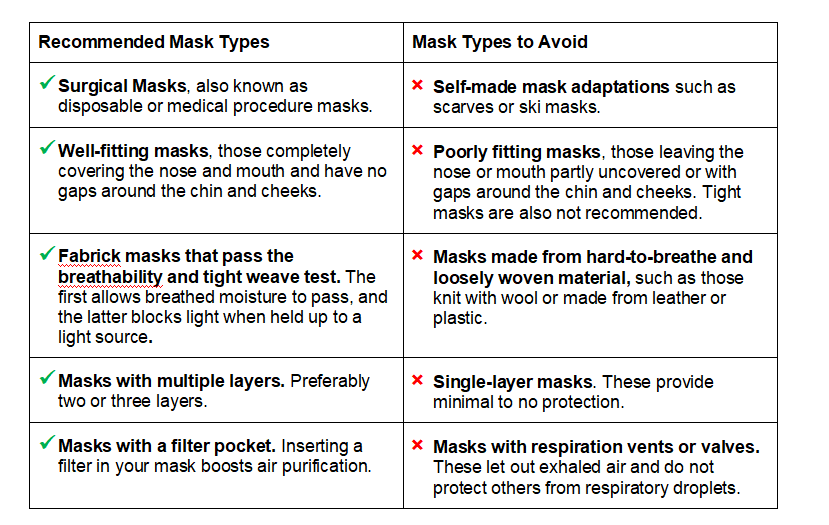
Health agencies do not recommend types of masks and face protection gear that provide poor or no protection from respiratory droplets. These types and options include:
Masks with Exhalation Valves or VentsMasks with exhalation valves or vents are meant to protect only the wearer from external pollutants. However, there’s solid
evidence that these masks allow an outflow of respiratory particles through the valve.
As such, those around a COVID-19-infected person wearing a mask with a vent or valve can easily breathe in the particles. It also means that the mask is ineffective in community efforts to stop the spread of the virus.
Face Shields and Eye Protection GearAny personal protective equipment worn as an alternative to a mask must cover the nose and mouth. This is not always true with clear face shields and eye protection gear, such as goggles.
Some research has put face shields at the same COVID-19 protection level as masks. However, health agencies do not recommend using these options as stand-alone protective gear from the SARS-CoV-2 virus.
If you must use them, face shields and goggles should serve as additional gear over/with the face mask. In the end, these studies also discovered that using face shields alongside face masks provides better protection, just like using cloth masks over medical masks provides
enhanced protection.
Also, despite their wide space allowance, do not use face shields on infants.
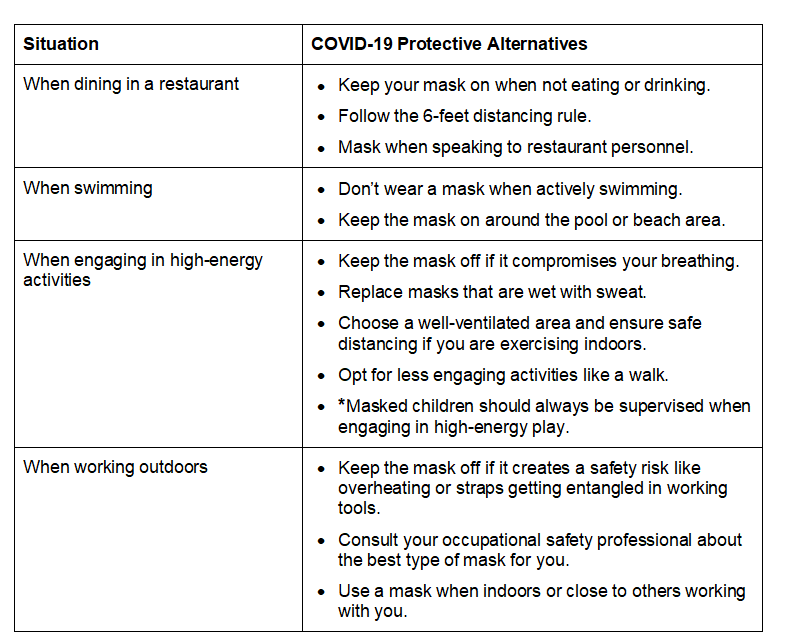
That said, health agencies recognize that there are situations where wearing a mask isn’t practical, as when speaking to persons with hearing impairment.
In such cases, use face shields and adhere to the following safety measures:
And now, with a clear idea of the recommended types of masks and those that are not, the next crucial question is who should or should not wear these masks.
And now, with a clear idea of the recommended types of masks and those that are not, the next crucial question is who should or should not wear these masks.